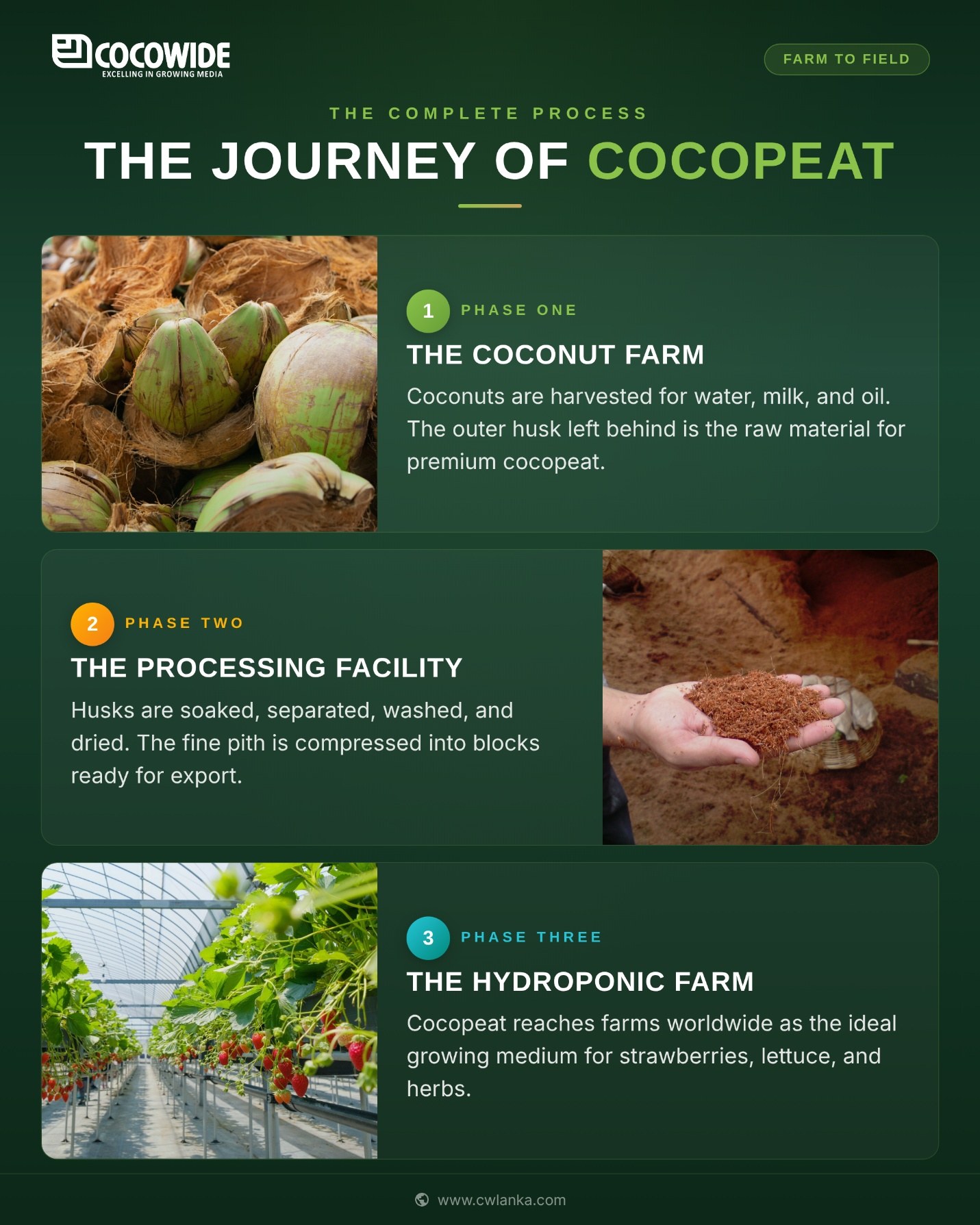
Ever wondered how a simple coconut husk transforms into one of the most powerful growing mediums in the world? Here's how it happens 👇
🥥 Phase 1: The Coconut Farm
It all starts in lush tropical coconut plantations. After coconuts are harvested for their water, milk, and oil, the outer fibrous husk is left behind. What was once treated as agricultural waste is now one of the most valuable byproducts in sustainable farming.
⚙️ Phase 2: The Processing Facility
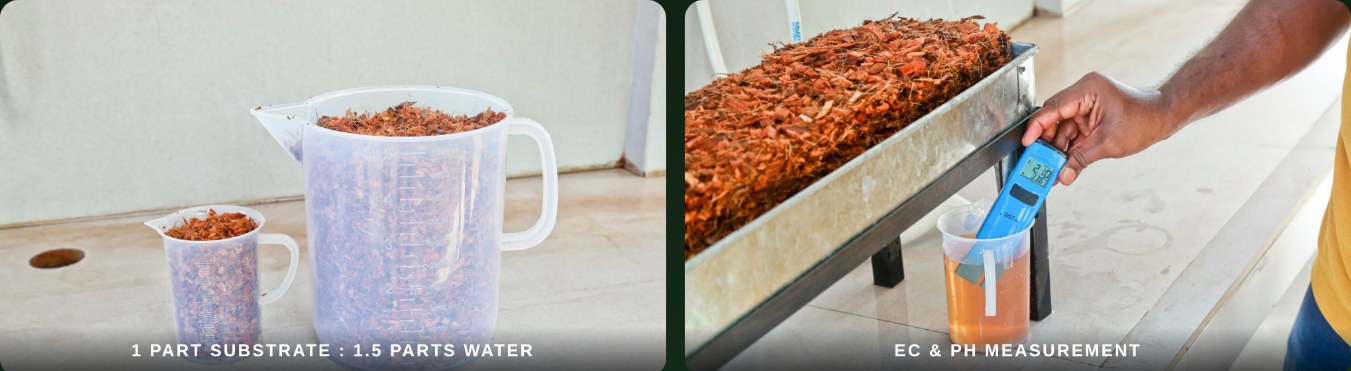
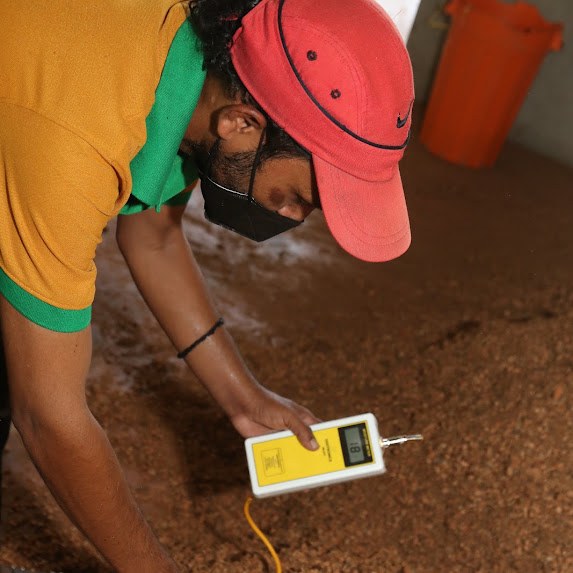
During this phase, these husks go through a careful transformation. They are soaked, softened, and mechanically separated. The fine, spongy pith is then extracted, thoroughly washed to remove excess salts, and dried under controlled conditions. Finally, it is compressed into compact blocks that are easy to store, ship, and use. Every batch undergoes strict quality checks to meet international export standards.
🌿 Phase 3: The Hydroponic Farm
The finished cocopeat travels to modern hydroponic farms across the globe. With its exceptional water retention (holds up to 10x its weight!), natural aeration, and near neutral pH, it creates the perfect environment for crops like strawberries, lettuce, tomatoes, and herbs to thrive all year round.
✅ 100% Organic
✅ Renewable & Biodegradable
✅ Trusted by Professional Growers Worldwide
🌐 www.cocowidelanka.com
#Cocopeat #Hydroponics #SustainableFarming #GrowingMedia #CocowideLanka #CoconutHusk #OrganicFarming #SriLankaExports #HydroponicFarming #CoirProducts #AgricultureInnovation #FarmToField #PlantGrowth #UrbanFarming #GreenHouseGrowing